
Love and Genius: An Interview With Lauren M. Gunderson

April 18, 2026

By Wendy Weckwerth, Dramaturg
Lauren M. Gunderson has been one of the most-produced playwrights in America since 2015. Dramaturg Wendy Weckwerth chatted with Lauren about why she chose to adapt the enduring and ever-popular story of the March sisters.
WENDY WECKWERTH: Why adapt the novel that’s been retold in many forms — stage, film, television, ballet, opera, anime and fan fiction, among others — over the years?
LAUREN M. GUNDERSON: It’s a story that’s been part of my life for so long. My first interaction with the story was being cast as Jo in a middle school production performed in the cafeteria. I had really short hair at the time, and when Jo sells her hair, I took off the hairpiece and shocked everyone. My well timed punk pixie cut was a theatrical triumph.
Fast forward to a conversation with Zak Berkman, Artistic Director at People’s Light. He asked to read my adaptation of Little Women. I said, “I don’t have one,” and he said, “You probably should.” He was right. Louisa May Alcott’s novel pretty much checks off everything I attune my voice to: historical characters, sisterhood, feminism, writers, women artists supporting each other and love stories.
I wanted to focus on the courage it takes to tell a true story, especially your own. Also, I love a love story, and the love stories in this book are so unique, complex and full of twists. I wanted to let those love stories shine — while showing that the family’s care for each other is the brightest love of all. It can’t be dimmed, no matter what tragedies come for them.
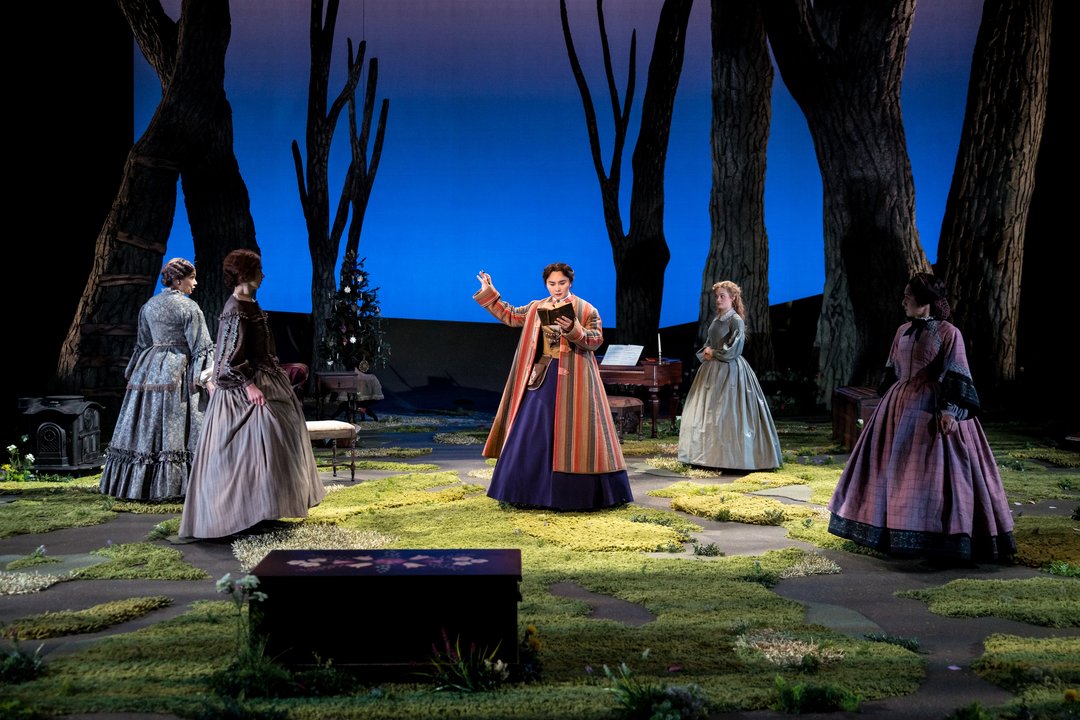
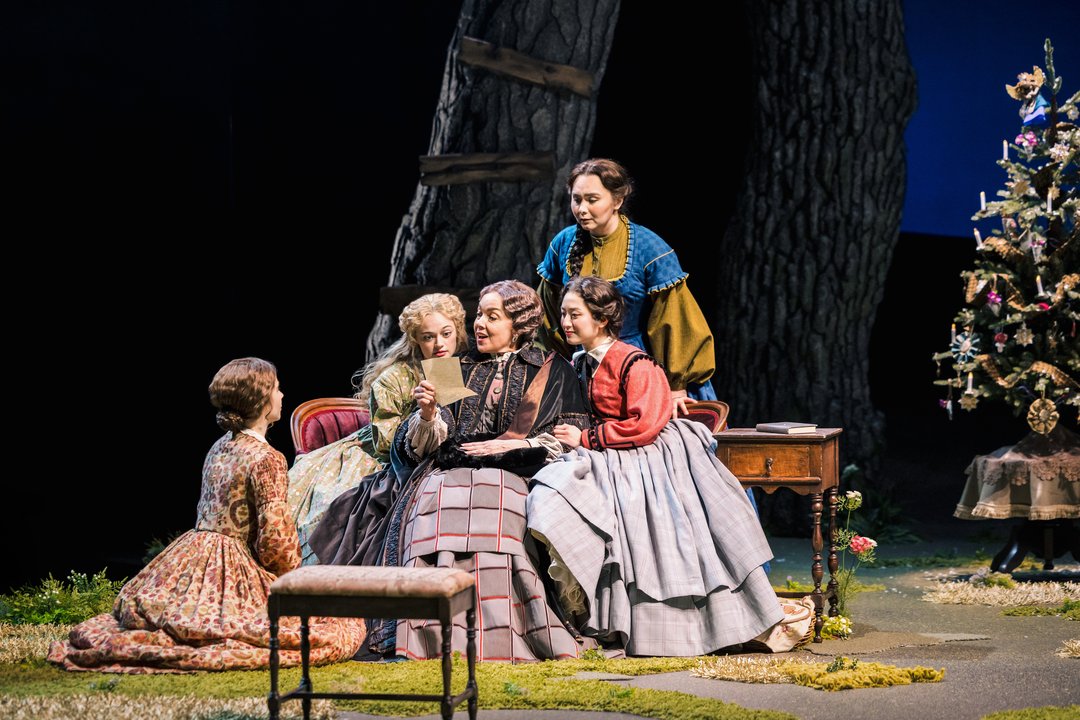
WW: What was the most challenging part of adapting this long piece of fiction for the stage?
LG: Adaptation is largely curation, and it starts with a real respect for the language. I’m so impressed with the tender wit of the novel’s interior revelations and reckonings. To capture that in a way that didn’t feel strange, I needed to make that intriguing interiority external — but in a propulsive and poetic way. That meant cutting a lot: much of the father’s journey, a lot of Amy’s arc toward maturity and so many other details.
WW: Generations of readers have shared an ongoing question: Are you a Meg, a Jo, a Beth or an Amy? Which are you?
LG: I’m probably mostly a Jo. But I’m an Amy, too — there’s some feist in me. And when I became a mom, I discovered a lot of Meg’s nurturing qualities. I like to think I have some of Beth’s quiet but stern confidence. But this adaptation leans into the idea that the March sisters, even if they seem like archetypes, are very much woven into each other. I see Beth’s quiet strength in the ferocity of Jo and Amy. Meg displays a streak of Jo’s plucky independence when she refuses John’s proposal. They share so much with each other and with Marmee.
WW: Which aspects of the real Louisa May Alcott did you want to capture in the Louisa/Jo character?
LG: Alcott’s grit, craft and determination were a real engine of her life and her creativity, which at that time was very “unfeminine.” I’m so proud of her for not bowing to the pressure of societal norms in her era.
Also, she never married. But the unpredictability and depth of Jo’s relationship with Laurie in Little Women make me think there’s some real experience behind it. Before this novel was a bestseller, Alcott was writing her “blood and thunder tales,” thrillers with kissing and all sorts of stuff she wasn’t supposed to write about — but they sold. It’s as if she thought, If you want a pirate romance, I’ll write you a pirate romance. You want horror? Sure, I’ll bring in some ghosts.
WW: What are you hoping audiences carry with them after seeing your adaptation?
LG: Most people have read or seen some version of Little Women, so what happens won’t be a surprise. But how it happened — Alcott’s actual experience that informed the novel — might be a surprise. So I want people to think, Wow, that was such a moving story. But also, Holy crap, this woman was genius. Alcott was an icon — a model of grit with an unstoppable brain and wide-ranging creativity. She proved that women’s stories can change the world. That’s a powerful legacy.
Louisa May Alcott's Little Women ran April 16 – June 21 during our 2025–2026 Season.